
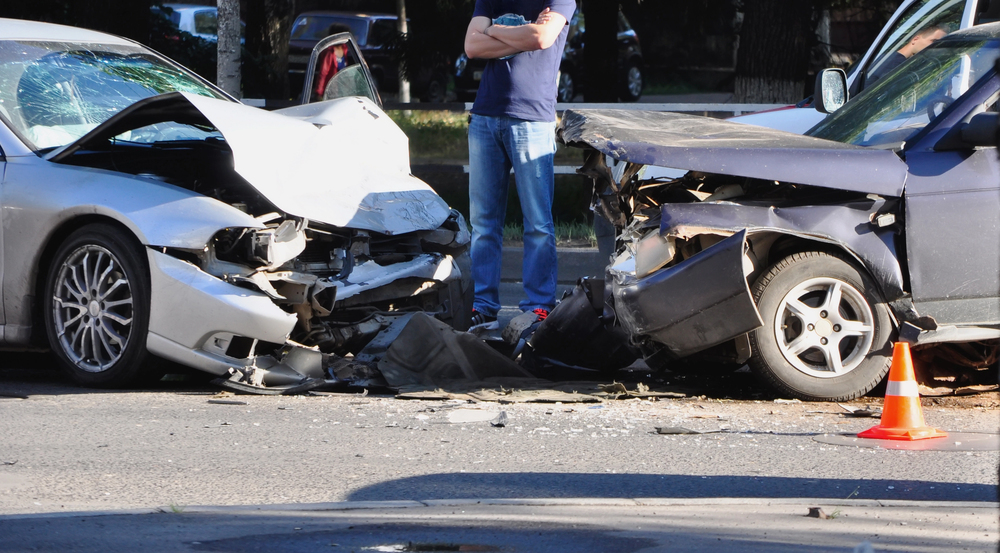
If the at-fault driver in a Baltimore, MD car accident has no insurance, or not enough, you have several options. Maryland is an at-fault state, meaning the negligent driver is responsible for damages, but practically speaking, your ability to recover is going to depend on their insurance coverage, your own coverage, and some other factors. Talk to an uninsured motorist attorney right away after an accident like this to make sure you’re exploring all your options.
What to Do After a Baltimore, MD Accident With an Uninsured or Underinsured Driver
1. File a Claim Under Your Own Uninsured/Underinsured Motorist (UM/UIM) Coverage
This is typically the most effective and reliable option, and it’s what you get UM or UIM coverage for. Maryland requires all auto insurance policies to include uninsured/underinsured motorist coverage unless you specifically waive this coverage in writing. That means you’ll likely have at least $30,000/$60,000 uninsured/underinsured coverage for bodily injury and $15,000 for property damage, and hopefully more if you got a bigger policy.
Things to Know
It’s important to also know that the amount of coverage you have from the other driver in a UIM situation will be counted against your UIM coverage. For example, if the driver has $30,000 in liability coverage (the standard minimum) and you also have $30,000 in UIM coverage, then you cannot collect any UIM at all. If the driver has the minimum but you have more, say $60,000, the $30,000 from the at-fault driver’s coverage is subtracted so you only have $30,000 in UIM.Maryland’s strict contributory negligence doctrine also means that if you contributed to your accident in any way at all, you not only cannot collect from the at-fault driver, but you also cannot collect UM or UIM coverage.
2. Use Other Coverages on Your Policy
You should have Personal Injury Protection (PIP) protection for medical expenses and lost wages, though you can also waive this coverage. Collision coverage, if you have it, will also pay for your vehicle repairs after the deductible is paid. Both of these kick in regardless of who is at fault, and they can be a quick way to access some funds while you try to access UM or UIM coverage.
3. Sue the At-Fault Driver Personally
You can bring a lawsuit against the negligent driver, but bear in mind that if someone doesn’t have insurance, that often means they don’t have enough assets to pay for your losses. Even if they do, payment may come in the form of garnishing their wages or putting a lien on their property, which means you may only get small amounts in dribs and drabs. Your attorney will let you know if this is an option to consider.
4. Talk With an Uninsured Motorist Attorney
Talk to us today at the Law Offices of Elan B. Rafael in Baltimore, MD. We can help you work through the options and decide if a lawsuit is feasible. We also serve Silver Spring, Brooklyn Park, Glen Burnie, Towson, Columbia, Annapolis, and Rockville.
Connect with us


- July 2026
- June 2026
- May 2026
- March 2026
- February 2026
- January 2026
- December 2025
- November 2025
- August 2025
- July 2025
- June 2025
- April 2025
- February 2025
- December 2024
- October 2024
- September 2024
- August 2024
- July 2024
- May 2024
- March 2024
- January 2024
- November 2023
- October 2023
- September 2023
- August 2023
- July 2023
- April 2023
- February 2023
- December 2022